Ace Today, Ache Tomorrow: is tennis breaking its brightest stars?
Knee, wrist, shoulder and muscle injuries are taking leading players out of the game. The causes are complex, but tennis could do more to protect recovery before pain becomes a prolonged absence.
 Andrea Michelini
5 min read
Analysis | 25 October 2026
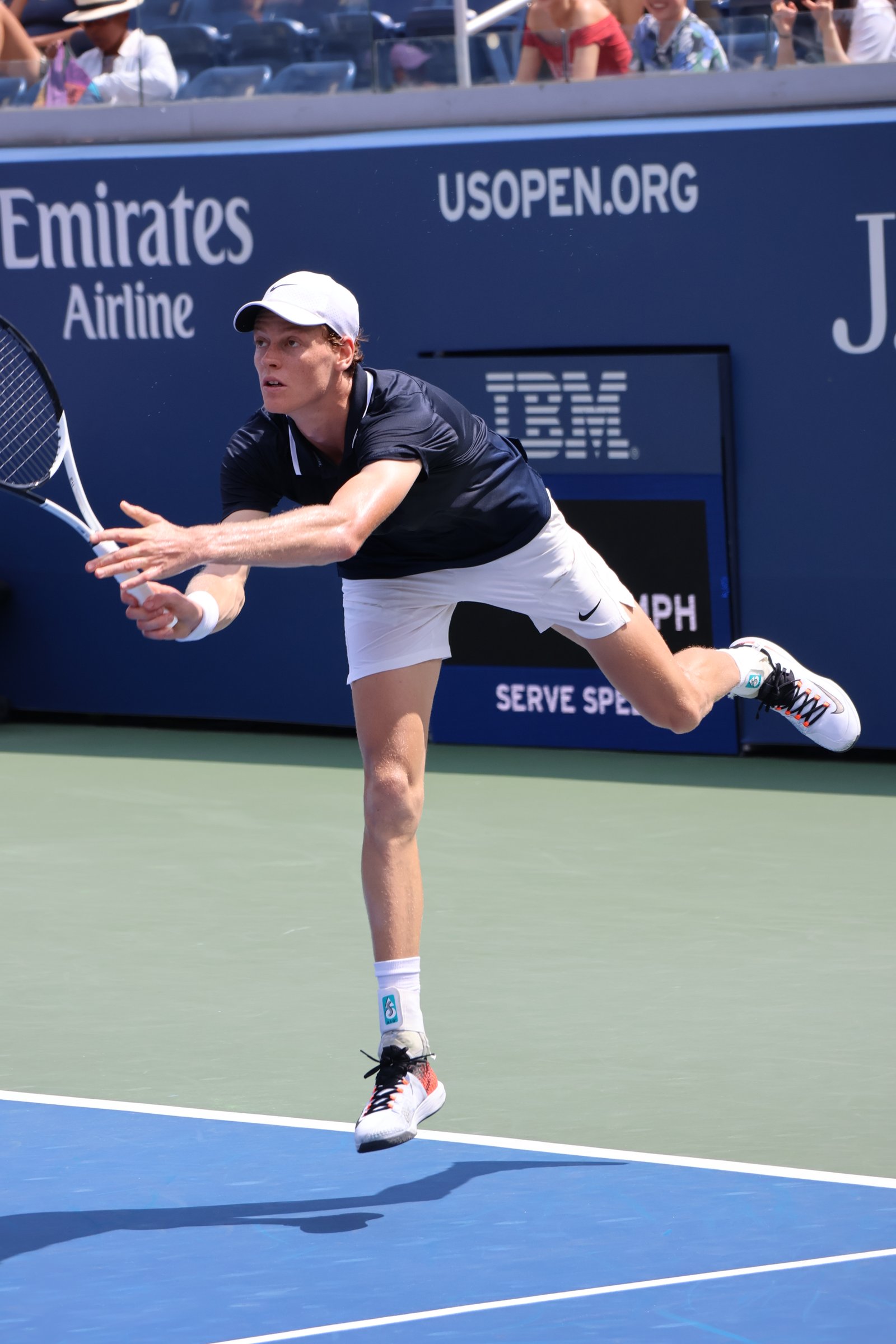
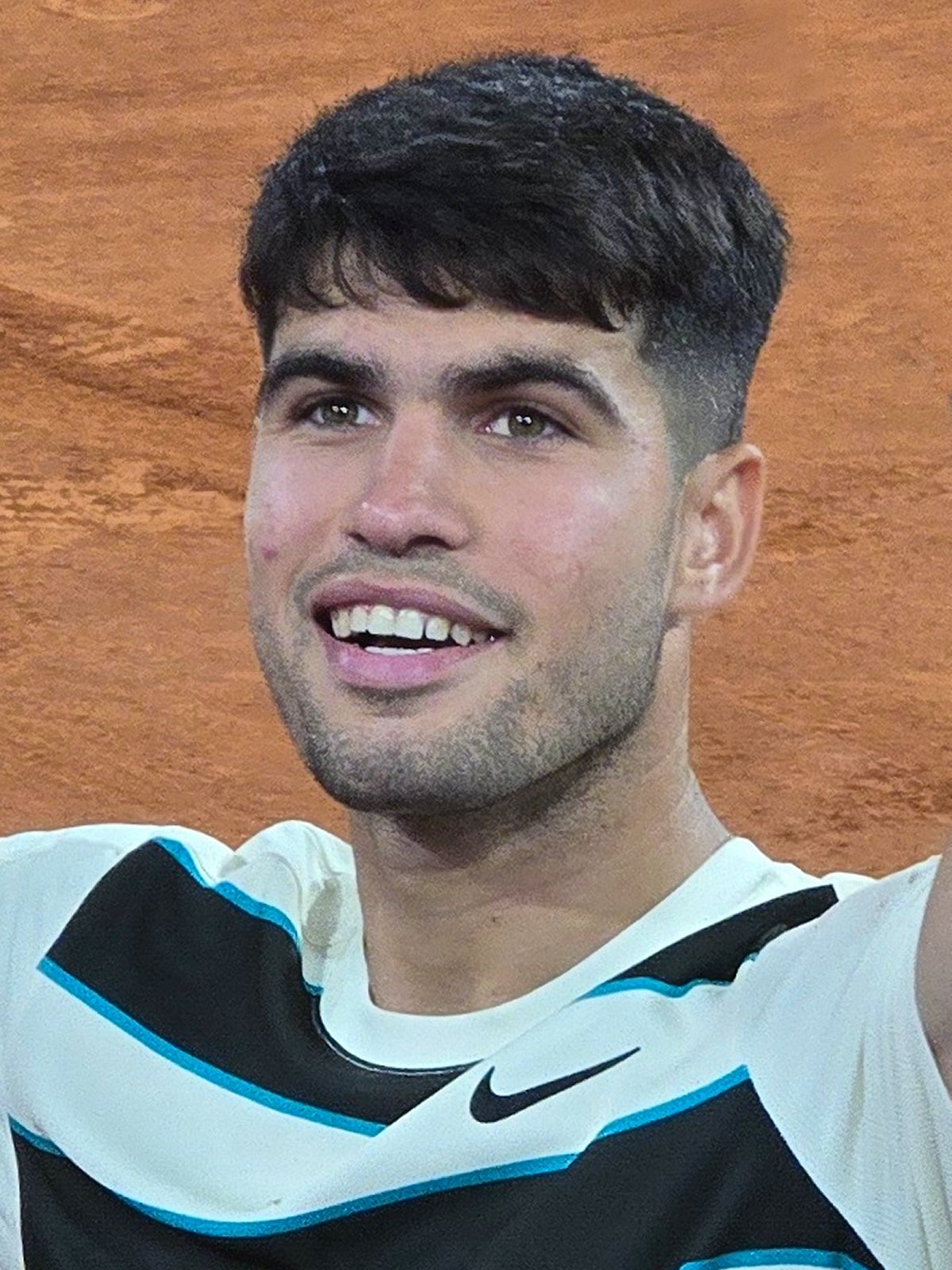
Photos: Jannik Sinner — Hameltion; Carlos Alcaraz — Like tears in rain. Both via Wikimedia Commons, licensed under CC BY-SA 4.0.
Tennis sells its rivalries through the promise of another meeting: another Sinner–Alcaraz final, another test of endurance, another match that pushes both players further. Increasingly prominent in that story, however, is the appointment neither player wants—the medical assessment that determines when they can compete again.
The recent absences of Jannik Sinner and Carlos Alcaraz make the physical cost impossible to ignore. They also invite an easy explanation: too much tennis. The more useful question is whether the demands placed on each player leave enough time to recover and prepare for the next challenge.
The names behind the concern
Sinner’s right knee problem became a major interruption to his 2026 season. The ATP confirmed his US Open withdrawal on 21 August. On 6 October, he announced that his season was over. Reuters reported that he had not competed since winning Wimbledon in July and would undergo a course of treatment, with his team emphasising recovery before preparations for 2027.
Alcaraz’s interruption involved a different joint and a different timeline. A right wrist injury sustained during his April appearance in Barcelona kept him away for more than four months. The ATP’s account of his recovery lists the tournaments he missed, including Roland Garros and Wimbledon. On 20 August, the US Open confirmed his planned return in New York. This was a substantial absence earlier in the season, not evidence that he remains sidelined today.
The problem extends beyond that rivalry. Novak Djokovic retired after one set of his 2025 Australian Open semi-final, explaining that a muscle tear had become too painful to manage. In the women’s game, the WTA reported on 15 October 2026 that Zheng Qinwen had withdrawn from Osaka with a continuing shoulder injury, following her withdrawal from Wuhan.
These are different conditions affecting athletes with different histories. Their names illustrate the consequences of injury; they do not establish that every case has the same cause.
A serious burden, not yet a simple trend
A succession of famous withdrawals can feel like proof that tennis has become more injurious than ever. Establishing that requires consistent injury records and comparable measures of exposure across seasons. A calendar with more matches also creates more opportunities for injuries to occur, even if the risk per hour remains unchanged.
The tennis-specific extension of the IOC injury-surveillance consensus recommends recording more than playing time: matches, sets, games or points also help describe exposure. Two hours of tennis can involve very different physical demands. Retirement, withdrawal, illness and a diagnosed musculoskeletal injury should not be treated as interchangeable data.
That caution strengthens the case for action. Tennis does not need to prove an unprecedented epidemic before taking prolonged absences seriously.
The strongest hypothesis: demands outpacing recovery
A plausible explanation is an accumulation of stress that sometimes exceeds a player’s capacity to recover. The IOC consensus on load and injury treats workload broadly, encompassing training, competition, travel and psychological demands. It stresses individual responses and the risks associated with poorly managed changes in load.
Applied to tennis, the hypothesis is straightforward: demanding match sequences, additional practice and travel may leave less room to recover before another period of intense play. A player returning from injury also has to rebuild the capacity to tolerate competition. This is a general explanation of risk, not a diagnosis of Sinner’s knee or Alcaraz’s wrist.
There is tennis-specific evidence worth considering. A 2020 study by Stephanie Kovalchik examined 389 professional male players across 55,773 competition weeks. Its modelling linked greater cumulative competition load to a higher risk of extended time away, with the effect increasing with age.
The limitation is important: time away was used as an indicator, not a medically verified injury diagnosis in every case. The study supports investigating cumulative load; it cannot prove which tournament caused a particular injury or prescribe a universal safe number of matches.
Winning makes the calculation harder
The calendar is only part of the workload. A first-round defeat and a title run occupy the same tournament slot but impose very different demands. The players most successful at surviving the draw accumulate more matches—and then must decide how quickly to compete again.
Zheng’s recent experience illustrates the distinction. The WTA recorded 15 hours and 16 minutes on court across seven matches during her Beijing title run, before the subsequent shoulder-related withdrawals. The sequence makes workload relevant to the discussion, but it does not prove that Beijing caused the injury.
Nor is the answer to remove demanding training. Players need preparation to tolerate elite competition. The IOC guidance recognises that progressively developed fitness can be protective. Simply reducing activity without considering conditioning, previous injury and the demands of returning could miss the point.
Equipment and playing conditions also deserve investigation. But blaming a particular ball, surface or playing style for a named athlete’s injury would require evidence beyond a withdrawal announcement. An attractive theory should not become a medical conclusion by repetition.
A practical proposal: protect recovery before injury forces it
The tours should pilot protected recovery blocks built into a player’s season plan, with additional flexibility after unusually demanding runs. The principle would be to make a planned pause a realistic option before an injury demands a much longer one.
This would require agreement between organisers and player representatives on participation requirements, financial consequences and access to exemptions. The exact duration should be tested with independent sports-medicine input rather than presented as a magic number. Lower-ranked players would need financial support: an opportunity to rest is less useful if taking it means being unable to fund the next trip.
The plan should cover the player’s full competitive workload, including optional exhibitions. Moving the same exertion into a nominal recovery window would undermine the purpose. At the same time, a recovery block should allow individually prescribed rehabilitation or conditioning; it should not impose identical inactivity on everyone.
At team level, the companion measure is a shared record of matches, training, symptoms and recovery, interpreted by qualified medical and performance staff. The IOC consensus recommends combining measures rather than relying on one number to predict injury. Medical decisions about readiness should remain individual.
The pilot should be judged over multiple seasons using standardised injury rates, days lost, recurrence and player availability. It should also track the financial effects on players and tournaments. Fewer events or appearances have costs; the proposal needs to demonstrate a benefit, not merely sound compassionate.
Protecting the rivalry means protecting the players
No calendar can eliminate injury from an elite sport. Accidents, previous damage and individual vulnerabilities will remain, even with excellent preparation and sensible scheduling.
But tennis can change the incentives around recovery. A sport that depends on extraordinary athletes should make it easier for them to stop briefly, rebuild properly and return ready—rather than treating every available week as another opportunity to compete.
Sinner and Alcaraz are compelling examples because their absences change the tournaments around them. The same principle should apply to the rest of the tour: availability is part of sporting quality. The next great rivalry is worth more when both players are healthy enough to sustain it.
Andrea Michelini
Writer
No comments yet — be the first.